Runs on Espresso
Menu
  • Home
  • Blog
  • Runs on Espresso Media
  • Planning
  • Runners
  • About Runs on Espresso
Menu

Author: Jenna

Jenna Volden has a degree in business and has spent the last 10 plus years working for others. She believes it is time to start her own photography and writing business. She enjoys running, coffee and helping others achieve their goals. Gluten-free foods are a lifestyle, not a choice, for her due to celiac disease. She is currently based in Phoenix, Arizona.

Find Your Why and How to Set Financial Goals

Posted on October 21, 2022October 12, 2022 by Jenna

Are you ready to start budgeting?

You’ve read through What is a Budget, and maybe you’ve even set up a Holiday Budget, but now you are ready to settle in and set your budget! What will the first steps be? We are going to figure out our why and set some goals. And I’ll give you homework for November’s blog. 

First, grab your budgeting worksheets so you can fill them out as we go.

We want to determine our why. Why do you want to budget? Why do you want to get your financial life in order? You can have one why or many. It really depends on what you are doing this for. If you are making a budget because it’s what you’re supposed to do, you will most likely fail. If you sit down and think about your why and realize you want to start a budget to stop living paycheck to paycheck or to help teach your children about money so they don’t struggle as you did, it will be easier to stick with your budget. 

Me, I want to get my finances in order so I don’t have to stress about money. I want to make sure I have enough to fund the experiences I want to do now and well into my retirement. I want to enjoy my retirement and not have to work full-time until I die. 

We will all have different whys and they will change over time.

Next, we are going to set our goals but first, we are going to answer some questions. You should be honest with yourself. No one else is going to see your answers. Your worksheet has space to answer these five questions.

  1. Think about your current financial situation. What is one thing you could do to improve your financials? How would your life change if you fixed just that one thing?
  2. What are your financial hopes and dreams? Think about the little things and the big, pie-in-the-sky stuff. Don’t limit yourself. Where do you want to be?
  3. Start a list of how you can improve your current finances. What could you cut out? What could you work to spend less on? Remember, this shouldn’t be all or nothing. You don’t want to cut everything all at once and end up feeling deprived and going on a spending spree. Can you make coffee at home? Maybe investing in a fancy coffee machine and some supplies would help save in the long run.
  4. What obstacles do you have? What are your money fears or limiting beliefs? Write down each obstacle and try to think of two or three solutions for each.
  5. Imagine how you will feel when you have reached your goals. Write it down. Reference it often, especially when you are struggling.

We have our why. We have taken some time to think about and answer the five questions. Now we will set some goals. We will decide on a few goals and pick one primary goal to work towards first. As stated above, we don’t want to go all in and get burnt out or feel like we will never reach our goals. Once you feel you have a good handle on goal number one, you can add in goal number two. You can also reach goal one and then move on to goal two. It will really depend on you and what your goals are. 

Of course, you will be reviewing and updating your goals as we go along. I tend to look at my goals every quarter and see if they are still relevant or serving me.

What kind of goals can you set?

  • Pay off credit card debt
  • Build an emergency fund
  • Stop living paycheck to paycheck
  • Plan for retirement
  • Improve credit
  • Payoff home or car loans
  • Start, or increase donations
  • Start investing
  • Write a will

Those are nine basic examples of the types of goals you can set and work towards. If you have credit card debt, you may want to start there. Write down your top three goals on your worksheet. 

First, pick the goal you want to prioritize. We will use credit card debt as our example. We are going to answer a few questions. Not all of these will be applicable to each goal so if you don’t have an answer for something it’s ok! Move on to the next one. And sometimes, you need to put in some work before you can answer! That is totally ok, make a note that you will come back after reviewing some resources. 

To start, answer the who, what, when, where, why, and how.

Who? You and your partner need to be on the same page. What? Pay down debt. When? We will start on our next credit card due date and it should take us six months to pay off. Where? Not applicable. Why? To have financial freedom. How? We will review the different methods and pick the one that works best for us. 

What do you need to accomplish this goal? What resources or supplies do you need? For your credit card debt, you may need all your current statements. You need to know what you owe and the interest rates. Are there any skills I need to brush up on? For the debt payoff, probably not. What do I need to learn? You need to learn HOW you will pay off the debt. Should I do the avalanche or snowball? Something different? You will read up on different methods and philosophies before deciding. You may want to try an online calculator to see which will pay it off fastest or with the least amount of interest. 

You’ve reviewed your resources and have decided to start with the snowball method. You think paying off the smallest debt first will give you a boost to keep going. You can update your how section now. 

Lastly, we are going to take each goal and break it into smaller, manageable steps. 

For our debt payoff, we will list our debts, minimum payments, and interest rates. Grab a notebook or spreadsheet and list your debts in the order you want to tackle them, based on the snowball method (smallest to largest).

We now have all our debt info in one spot. The next step will be to determine how much extra we can pay for our first debt. Maybe you can pay an extra $50 a month. Make a note on your list or spreadsheet. For me, my next step would be to write the bill and new payment amount on my bills calendar. Then when I go to pay bills, I’d consult my calendar, see my planned payment, and set up payment. You may go in and set up an autopay right away so you don’t forget. You may also set up the other card’s minimum payments at the same time.

Your steps may look different than mine. We will all have different small or manageable steps depending on how our brains work!

Let me know what financial goal you are going to prioritize in the comments.

I used the credit card payoff as an example because that is my main goal right now. I am also building an emergency fund but it is not my primary goal and is not where my focus lies right now.

Next month we will tackle starting our budget! Your homework is to gather your bank statements, credit card statements, and paychecks from the past three months! You will need them to figure out where the heck all your money is going!

Need a visual walkthrough of all the steps? Head over to YouTube and watch the video version (and don’t forget to subscribe so you don’t miss all the other budgeting videos that are coming)!

New Balance Fresh Foam 1080 v11

Posted on October 14, 2022October 12, 2022 by Jenna

Are you looking for a versatile running shoe?

You may want to check out the New Balance Fresh Foam 1080 v11 (the newer v12 is now available). The Fresh Foam 1080 offers plenty of cushion and a surprisingly responsive ride. Errr, run. The upper is knit for breathability but still provides decent structure and support. 

The tech specs for the New Balance 1080 v11:

  • Neutral 
  • 8.1 oz women | 9.3 oz men
  • 8mm Drop

The New Balance 1080 is designed for everyday training on the road or track. 

About me:

I run in both stability and neutral shoes. I have had a gait analysis done before and stability was recommended but not needed. I have a fairly high arch, although it will sometimes roll inwards. On average, I run 20-30 miles a week, mostly on roads until winter when I do longer runs on the rocky trails of Phoenix. I have been running for 10+ years in everything from 5k to marathon. I am a solid middle-of-the-pack runner.

Basically, I am your average recreational runner. 

I have put about 50 miles on these shoes before sitting down to determine my thoughts. For me, the New Balance 1080 reminded me a lot of the different Brooks I have run in over the years. Lots of cushion, decent energy return, and a smooth run. I didn’t feel like it took much effort to lift my foot off the ground. It also helps that the shoe is only 8.1 oz. 

Even though they were responsive, they did not have a lot of bounce. They aren’t going to make you feel faster like the carbon plated shoes. 😉 They are light enough to do your speed or track work in if you don’t want to buy different types of shoes for different workouts. 

The mid and forefoot felt firm but there wasn’t any ground feel, which I prefer and seems is getting harder to find in these types of shoes. Everyone is going to ALL THE FOAM! I get it, I think most people prefer running on clouds over ground feel. I am the odd one out.

The New Balance 1080s felt ready to go from run number one. My foot felt secure but not locked in the mesh upper. I didn’t have to mess with the laces or tighten them too much. The heel was secure, did not slide around, and did not place any pressure on the achilles. I really liked how this shoe fit my heel and really like how the back of the shoe is soft and flexible, yet conformed to my heel. I had never really contemplated the fit or feel of the heel before on a shoe!

My longest run in these was 6 miles and I definitely would wear these for double-digit runs. They are quite comfy. I did do a few strides in these (but no dedicated speed work) and think they would be suitable for speed work as well. 

I ran on the sidewalk and a dirt path in these. They were responsive on both with a good grip but not too much. I only ran in the summer heat and sun and cannot comment how they would do in weather such as rain or snow. 

Will I continue to run in these? Yes. I will keep these in my easy and long run rotation with my Brooks. Would I purchase these again? Maybe. I really would prefer more ground feel but if I saw a good deal on these shoes I would pick them up. 

Who would I recommend these for? A recreational runner that is looking for a versatile shoe that they can do easy and long runs, and some speed work in and use in races. They are light, breathable, and can go the distance. I can’t speak to age group winners or the like but I would guess this would be a decent training shoe for easy and long runs to go with their preferred speedwork and racing shoes.

What is your current running shoe? Would you give the New Balance Fresh Foam 1080 a try?

Want to see more about my illustrious running career? Head over to Instagram and give me a follow!

I did look to see if v12 had been updated as the v11 is becoming harder to find. The only major change I saw was the heel. They went back to a traditional, padded heel collar per Road Runner Sports. Other changes are similar to what all shoes do from year to year to improve how it performs by adjusting flexibility, cushioning, and weight.

After reviewing photos of the return to the old heel, I would be hesitant to try these as the heel is one of my favorite parts of the v11. This is all personal preference and you may prefer the traditional heel of the v12. 

Top 3 Books on Running and Mental Health

Posted on October 10, 2022October 1, 2022 by Jenna

Running and mental health go together like peanut butter and jelly.

Many runners use running as a way to help their mental health. I know I do. And many runners love to read about running. But what about reading books about running and mental health? They do exist and I have read a few of them. 

October is emotional wellness month and I thought I would share my top three books on running and mental health. Maybe you will find something new to read to celebrate!

In no particular order (because I think they are all GREAT!):

  1. Running is My Therapy by Scott Douglas
  2. Strong by Kara Goucher
  3. Let Your Mind Run by Deena Kastor

Links are Amazon Associate Links. I may receive a commission if you order through them.

Running is My Therapy looks at the relationship between running, anxiety, and depression. Douglas does a great job of mixing in his own and others’ struggles along with studies to show how running can help ease anxiety and depression. Douglas explains the scientific stuff in a way that is easy to understand and not boring. Even if you know all of this information already it is a nice refresher and I think all the personal stories help illustrate that you are not alone.

Running cannot heal anxiety, depression, and other mental health issues but in conjunction with other treatments can really help.

In Strong, Goucher guides the reader through overcoming self-doubt and building confidence. Goucher and other professional runners share their tips, techniques, and their stories as well as input from sports psychologists. There are plenty of included activities to guide you through building yourself up. 

I even followed her journal technique for a while after I read this one. It might be time to revisit and start using it again!

Let Your Mind Run somehow unlocked my mind. For some reason, I really connected to Deena Kastor and after I finished her book, I put what she talked about into practice.

I would recommend this book to anyone, not just runners. It is her memoir but it seems so much more than that, almost like a roadmap for others to follow. I often found myself having to stop reading because I was so emotionally drawn into her story. I had tears of joy when she had a victory and sadness with a setback. I felt like I was with her the entire time. 

It might be time for me to revisit all of these books! I had forgotten how great they were and how they really helped my running when I read them.

What are some books that have helped you with mental health or emotional wellness?

Be sure to head over and follow on Instagram for more fitness posts!

Does the ADHD Planner actually work for ADHD?

Posted on October 8, 2022October 1, 2022 by Jenna

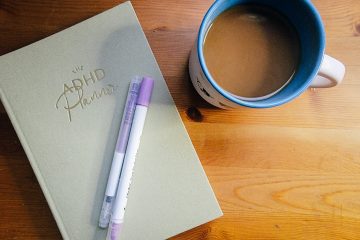
Today we are reviewing The ADHD Planner in green ($34.99),  also available in black. The green is hard linen cover and definitely has a rougher texture, which may be an issue for some with ADHD and sensory issues. It looks like the black may be the same material. The planner is 6×9, a good size for portability and not too small for those of us with large handwriting! There are three (3) ribbon bookmarks that hang out about an inch at the bottom of the book. The paper is very smooth. There is no tooth or texture but it does seem thicker than average paper. 

It is undated, which means you can start it anytime and if you don’t use it for a while you can pick it back up at any time.

The Amazon copy mentions that it is made by people with ADHD and was made for those with ADHD. The cover and spine are imprinted with The ADHD Planner in gold. I think it is quite noticeable so some people may not be comfortable using this planner at work. I am open about my ADHD but I know others do not like to share or don’t want their employers to know. On the back epic self is imprinted in gold along the bottom edge. I kinda wish this was on the cover and spine instead! 

I was actually quite excited to test this one out. I did an initial flip through and it seemed like it would be really helpful! 

So what all is in here that got me excited? 

The first page is titled Intention Clarification and has seven areas of life/goals and asks where you are now, where you want to be, and why for each area. Next to that is a goals page with room for six goals. I guess you have to drop one of the areas. The next six pages are for really breaking down each goal (and it looks like the family was dropped. Guess it got lumped in with relationships). 

Next up is a routines and rituals page where you can fill in a morning, get in the zone, and evening routine. Followed by a brain strategy place to jot down things like what motivates you. There are two pages for listing Master Projects with space for two personal and two business project lists. Lastly, before the actual planning pages are two pages for to-do, each to-do page has a spot for daily, weekly, and monthly personal and business to-dos. 

Moving into the planning pages, we have a weekly overview, review, and preparation. The overview is more planner focused while the review and preparation feel more like a journal to me. Next is a brain dump and a weekly schedule. Each day of the week gets two pages. The first has tasks, chores, and checklists to make sure you did your routines and drank water. There is also a space to do time blocking. The second page is more journal-like with affirmations, notes, and accomplishments. 

This pattern continues to the end of the book. The Q&A on amazon says there are 13 weeks. I did not count to confirm this. (I’ve got ADHD, do you really think I’d sit and count that?!)

In the end, you get two lined note pages and nine ways to get out of an ADHD rut. 

I really like how the planner is set up and feels like a cross between a planner and a journal. On the surface, it feels like it would be helpful. But would I keep up with it? Would I stick with it?? I used it in September for the month before making my verdict. 

The first thing I did was start at the beginning. The intention clarification and my goals pages were a little difficult with no directions. I had to sit and try to think about how to set the pages and how I would fill them in. Some of the spaces were small and awkward to write anything of substance in. I did like the individual goal pages. There was logic to working through the page. I wish the obstacles and solutions boxes were bigger or instead of being vertical were horizontal. I liked the three-month habit tracker as well. 

I only partially filled out the routines and rituals. I am not a fan of the time because depending on the day it can vary. I also still don’t know what a “get in the zone” routine is. I also skipped the stuck and unstuck part of my brain strategy. 

I ended up not filling out the master project and to do pages. 

I started using it the week of 8/29. And I realized that it’s not a planner I can keep up with. I thought I would really like this one but it’s… ok. Even using a ribbon to mark the goals pages? I never go backward. I never check in on those pages and I never used the habit trackers back there.

It also became very redundant within itself. I did like the big 3 for the week on the weekly overview but the rest was worthless. I would write in the important events, dates, and deadlines there then re-write them on the weekly schedule AND the daily pages. It quickly became too much. 

The weekly review and prep page was great and I enjoyed the weekly reflections. The habit tracker? I was always scrambling to fill it in at the end of the week, which isn’t really the point. I used the brain dump for one week. I liked the weekly schedule and preferred that to the review. I can see the week at a quick glance. 

This brings us to the daily pages. I wish the big 3 and other tasks had check-off circles like the daily chores. I ended up using a highlighter or dot pens to make my own checklist. I need to check things off and I don’t like drawing a line through the task in case I want to look back and see what I did. I used the vitamin space to check off when I take my medication. 

The daily affirmation got old after six days. Maybe a weekly affirmation would be useful. 

The notes and accomplishment sections were helpful. It made me sit down each night (or the next morning) and really think about my day. I also jotted things in the note section I didn’t want to forget or wanted to schedule out 

The ADHD Planner had some great things about it but other not-so-great things. Am I going to continue using this? Probably not. I mean I have it, so I might. But I’m no longer excited about it. My EC daily duo and Makselife goal pages work so much better for me. Would I recommend this one? No. I think it has potential but there is too much redundancy and it expects you to remember to go back and look at what you did previously. 

I think it could be streamlined and the goals incorporated into the weekly overview. If it were me, I’d remove the important events & deadlines section and replace it with weekly goals. And maybe change the daily affirmations into some daily goal work. 

Also, the price point for this is a little steep for a 13-week planner. For a year you would need four of these at $35 each. That’s $140 for the year. 

What do you think about the ADHD Planner? Would you try it? What is your favorite or least favorite thing about the ADHD Planner?

Want to see the walk-through and how it worked out? Head over to YouTube for the video review!

September Reads | Runs on Books

Posted on October 1, 2022July 12, 2023 by Jenna

I feel like I was able to get back into reading this month! I didn’t get through as many books on my owned TBR (thanks library book & Net Galley review option) but I read. And that was my goal, to get back into consistently reading most days. 

What did you read this month? Be sure to let me know in the comments! Because clearly, I need more options. 🤪

Bird by Bird: Some Instructions on Writing and Life by Anne Lamott

☕☕☕☕ cups of coffee / 5

Bird by Bird is an interesting look at how to write. It isn’t your typical instructional book. And that’s ok. Author Anne Lamott takes you through her life with vignettes to demonstrate how to be a better writer. She uses her experiences to demonstrate and explain different aspects of writing from character development to getting published.

This book is not going to tell you to do X, Y, and Z to improve your writing. It’s more, as Stacy London would say, hippy-dippy. It makes you think. There are concrete suggestions, like carrying a notecard with you to jot things down or listening to conversations to become better at writing dialogue. It’s not all… out there. 

This book was recommended by many people and I kept seeing it mentioned so I decided to give it a read. It is definitely geared more towards fictional writing but I did enjoy it. I would say it’s worth a read if you are looking for a book on writing that isn’t about technical aspects but more about getting out feelings, and how people and things relate to each other to tell a story. 

The Naughty or Nice Clause by Kate Callaghan

☕☕☕☕ cups of coffee / 5

I received this book for free in exchange for my review from NetGalley.

Lyla grew up expecting to take over the family business, Except her father has mismanaged the business and sold his 51% of shares to Mason Klaus. Klaus is an investor who can help turn the company around. Instead of working with Lyla, he works against her and makes decisions she never would, causing tension between the two. When he cancels the company Christmas party, she decides to treat the staff herself. At the party, Lyla finds Klaus in his office, drunk. She takes him home but the staff somehow manage to start a fire in the office kitchen. 

Klaus shows up at Lyla’s to inform her of the fire and offer her a deal, come home with him to be a buffer with his estranged family and he will forget her party caused the office fire. She agrees and is swept away to his village and soon the two stop arguing and start to fall for each other. 

Of course, it would not be an enemy to lovers without additional content! But you’ll have to read the book for that!

Overall, I enjoyed The Naughty or Nice Clause. I thought it was well-written and well-paced until the end. The lead-up to the switch from enemies to lover was a slow burn but a good slow burn. You wanted to shake them both to get it together but when it finally happened it was perfect! I did think the ending wrapped up too quickly. I would have liked another chapter or maybe an epilogue. 

It was frustrating that Lyla worked for Klaus for a year and never had any kind of thought about the name for a woman who LOVES Christmas. 

I enjoyed the author’s unique take on Santa Claus and the North Pole. It was a little different than your usual Christmas book or movie. 

For those worried about graphic content, there were a few almost racy scenes and when they finally hook up it was descriptive but not carried on for long. There was also the use of a swear word in the sex scene. I do not recall it elsewhere in the book. 

Would I recommend this book? Yes, if you like cheesy Christmas movies on Lifetime this would be a fun read! 

Dogtography by Kaylee Greer

☕☕☕☕☕ / 5

Do you ever just look at your adorable puppers and think, I want to take amazing photos of you and make you last forever? 

No? Just me?

Well, Kaylee Greer is a professional Dogtographer and she is spilling all the tea! Her book is packed full of tips and tricks to help anyone, from beginner to professional photography, take better photos of dogs. She covers everything from dog behavior to choosing a location, to settings, lighting, and everything in between. 

The only drawback of the physical book is the size. It is not only thick but very wide. It made it awkward to hold and try to read. But it does not take away from the substance of the book which is why I decided to stick with a five coffee rating!

If you are interested in photography, dogs, and photographing dogs, I would recommend this book to you! 

The Problem with Muses: Notes on Everyday Creativity by David duChemin

☕☕☕☕ / 5

The Problem with Muses is a collection of short essays from duChemin’s podcast, A Beautiful Anarchy. His podcast, and this book, are an introspective on photography and creativity. Well, mostly creativity while touching on photography and other creative endeavors. 

I had listened to each episode of the podcast as they came out and this book was a review and reminder for me. I had pre-ordered it and did not realize it was his podcast in written form (probably because I totally missed that). I would have bought it either way and did enjoy revisiting these as essays. It meant I could take more time reading them and reflecting on what he said.

He always has valuable nuggets of truth that I need to face. 

This book is not about technical aspects of art or photography. It focuses more on how you, as an artist, can think about your creativity. He provides different ways to think about creativity, creating, and yourself. Sometimes it’s hard to look in that mirror but duChemin presents it in a thoughtful, kind, and gentle way.

I would recommend this book to anyone that hasn’t listened to his podcast (but also, go listen!) and is interested in thinking deeply about creativity. 

WOO! I finished four books this month! I conquered the Trevor Project Reading Challenge. AND I finished two books that kept getting set aside for other, flashy books. September was a great reading month for me and I hope to carry it into Spooky book month aka October! My plan, as of right now, is to read House of Leaves. It’s a thick book, supposed to be super scary, and may take me all month to finish!

What did you read this month? Did you conquer your goals?

Want more book content? Head over to TikTok for a short video version of my monthly reads!

Ten Ways to Celebrate Women’s Health & Fitness Day

Posted on September 26, 2022September 10, 2022 by Jenna

The last Wednesday in September is Women’s Health and Fitness day.

Women’s health and fitness day is all about raising awareness of women’s health issues and encouraging women to take control of their health and fitness. And health covers both our minds and bodies. We gotta make sure we are taking care of ourselves from the top of our heads, to the tips of our toes!

Here are ten ideas to celebrate Women’s Health and Fitness Day!

  1. Try a new activity! Is there something you’ve always wanted to try? Now is the time to give it a shot! If it requires some planning or purchases, start making your plans today!
  2. Take a moment for your mental health and meditate. Or write down three things you are grateful for today.
  3. Meet up with a friend or two for a hike at a local park (or even a walk through the neighborhood).
  4. Schedule any health appointments you haven’t had in a while such as your annual checkup or the dermatologist to check your moles. Whatever appointments you need to get on the calendar!
  5. Get yourself a massage.
  6. Make a healthy meal. Whatever that means to you.
  7. Make sure you drink your water!
  8. Learn about health issues for women and how you can take care of yourself. Or learn about your family health history. Do you need to update your doctor on any health changes in your family? Make notes for your next appointment. 
  9. Check-in with yourself. What else do you need? Water? Fruit? A walk? Maybe a journaling session?
  10.  Practice good sleep hygiene. Lower the temperature, put on new sheets, find your most comfy PJs, and go to bed at the right time to get all the sleep you need.

How will you celebrate Women’s Health and Fitness day?

Want more health and fitness? Head over to Instagram and give a follow!

How to Set up a Holiday Budget

Posted on September 19, 2022September 10, 2022 by Jenna

Halloween. Thanksgiving. Whatever December holiday you may celebrate.

All of these are right around the corner and will be here before you know it. Have you thought about how you will budget for all of these upcoming events? In reality, we should have started in January, or even July, but it’s never too late to plan and budget!

Why should you budget for the holidays?

The main reason is to avoid going into credit card debt, or more debt for some of us. The second reason is to know what you can spend on gifts, food, and new decorations. You can make a plan of everything you need to buy for the holidays and look for the best deals. You know, instead of running out at the last minute to grab whatever you can find. Lastly, so you can enjoy the season with less stress!

How will you create a holiday budget?

First, think about where you want to be at the end of the year financially. Do you want to be in more or less debt? Are you saving for anything? Working on an emergency fund? What financial goals do you have for next year? What major expenses might you have come up? What are your priorities for the year? Why are you thinking about these? Because you don’t want to put yourself behind on these goals just to fund your holidays!

How to set up your budget:

  1. Sit down and figure out your current financial situation.
    • Grab a planner or calendar with September through December and mark all of your paydays. Estimate how much money you will have for each check
    • Next fill in all of your upcoming bills and expenses. If you don’t know how much your electric bill will be, make an estimate. You can probably look at how much you paid last year and add a little more to be safe. 
    • Add up all your income and bills and then subtract your bills from your pay
    • How much do you have leftover? There is your holiday budget starting point!
  2. Create a plan for each holiday. If the holidays listed here aren’t ones you celebrate, swap them out for the ones you do. These are the ones we budget for in our house but I know not everyone celebrates Halloween or Thanksgiving.
    • Write down everything you need for each holiday, including gifts, food, and decor
    • Start collecting coupons, discount codes, and redeeming any points you could use towards items on your lists. 
    • Halloween
      • Costumes – how many costumes do you need? What can you reuse from previous years or things you already own? What do you need to grab?
      • Candy – Do you know how much candy you gave out last year? Are you going to grab it early and save it or do you need to wait until closer to Halloween? If you can get it early, you can grab regular candy on sale and not the “special” Halloween branded candy.
      • Decor – Take inventory, what do you already own? Do you need to replace anything? Do you want to get anything new?
      • Other – Is there anything missing you want to budget for? Do you do school cards or host a party every year? Write that down!
    • Thanksgiving and December Holidays
      • Food – make a meal plan if you’re hosting. Write down what you’ll make and what you’ll ask others to bring. Take inventory of your kitchen. Write down what you need to pick up from the store. Also, shop early. Don’t wait until the day before. You will have more options and less stress! And don’t forget to get those coupons! You can find some online and add to your loyalty card and others you can print off. 
      • Decor – Like Halloween, check what you have and determine if you want to update or replace anything. You might want to check any tree lights and make sure they work!
      • Other – Do you do a cookie exchange? Or donations to your favorite charities? Write all of it down! Do you need to travel? Wrapping paper? Cards?
    • Gifts
      • Write down everyone you would like to buy gifts for.
      • Determine how much you want to and are able to spend on each person
      • Look for coupons, sales, and online discount codes. 
      • If you know you’ll be out on Black Friday, you will already have your list and know exactly what you want to grab. But you may also see that toy your kid wants randomly on sale now and can grab it early!

Top Five Holiday Budgeting Tips

  1. Keep it simple and sustainable. For example, you can gift children something they want, need, wear, and read. We always gift our nephews a toy, a shirt, and a book. 
  2. Avoid using credit cards unless you know you’ll pay off the balance in full every month. We use our credit cards and pay off monthly to get travel miles and cash back. 
  3. Keep your gift lists and other inventory lists with you when you are out. You never know when you will find a good deal!
  4. Use a tracker to keep track of your budget and how much you have spent.
  5. Set yourself up for next year. Add up what you spent this year and add 10%. Figure out when you need to start saving (January, July) and how much you’ll need to set aside. Make a bucket in your savings for Holidays (or a new account or a cash envelope – however you save). 

Have you started your holiday budgeting plan yet? What does your budget look like?

Looking for holiday budget trackers? Grab them .

What are the Symptoms of Celiac Disease?

Posted on September 17, 2022September 10, 2022 by Jenna

Last month, we covered what celiac disease and gluten are and I mentioned there are many, many symptoms, more than 250 if you want a better idea of just how many there are. 

But what are the most common symptoms of celiac disease?

Don’t worry, I’m not going to only list the 250+ symptoms. OR AM I?! MUAHAHA Nah, I will stick to the most common. The symptoms and severity will vary from person to person. This can also make it difficult to diagnose celiac disease. On average it takes six to ten years for a diagnosis. For me, I started having issues in high school and was initially diagnosed with IBS. I thought that was the problem for years, approximately 15ish years. Once I found the right doctor it was only a matter of weeks, maybe a month to get the endoscopy scheduled.

The other problem is celiac disease can come on at any time. Some develop it and are diagnosed very young. I believe mine started in high school. I don’t recall the symptoms before that. The sooner you can be diagnosed and off gluten, the better for you and your future health. And your intestines can begin to heal!

Some common symptoms of celiac disease can include:

  • Anemia ✔️
  • Anxiety
  • Bloating or gas ✔️
  • Brain fog ✔️
  • Constipation ✔️
  • Delayed growth in children
  • Depression ✔️
  • Diarrhea ✔️
  • Discolored teeth
  • Fatigue/tiredness ✔️
  • Headaches or migraines ✔️
  • Infertility
  • Irritability ✔️
  • Itchy skin rash (dermatitis herpetiformis)
  • Joint pain ✔️
  • Liver disease
  • Pale mouth sores
  • Poor weight gain
  • Thin bones
  • Tingling/numbness/neuropathy
  • Vomiting

✔️= symptoms I had

I also had anxiety but that continued after going gluten-free and was only helped after being diagnosed with ADHD and going on Adderall. So not everything is celiac disease. 😉

If you have undiagnosed celiac disease and are eating gluten your body may not be absorbing all your nutrients. Because of this and the higher risk of osteoporosis, I also had to have a bone density scan after my diagnosis. At age 34. Luckily, I was all good there! 

I was very deficient in vitamin B and had to take supplements until my intestines healed and my numbers came up.

Having these symptoms does not necessarily mean you have celiac disease. Other risk factors include a close family member with it (it is hereditary – you can have the gene and not have the disease), and other autoimmune diseases (especially type 1 diabetes).

If you suspect you may have celiac disease, do not stop eating gluten. Discuss it with your doctor, and get the blood test, and endoscopy. You cannot do those two things if you aren’t eating gluten. And you don’t wanna not eat gluten and then have to re-introduce it. 

It is important to get a formal diagnosis for many reasons like it may help family members get tested, it will help you adhere to the diet cuz you know you gotta be strict, there are resources available to you such as ADA and for children a 504 plan, and if there is ever a drug, you will most likely need a diagnosis to get it. Lastly, if you don’t have celiac disease and go gluten-free it can affect your health. Gluten-free foods are higher in fat and sugar. They can also be missing key nutrients. Going gluten-free really only benefits those that need to for a medical reason.

What else would you like to know about celiac disease or being gluten-free? Let me know in the comments!

Head over and be sure to subscribe on YouTube for the video version!

Planning and Self Care

Posted on September 12, 2022September 10, 2022 by Jenna

What is self-care?

Google’s dictionary, provided by Oxford Languages, defines self-care as:

  • the practice of taking action to preserve or improve one’s own health.
  • the practice of taking an active role in protecting one’s own well-being and happiness, in particular during periods of stress.

Is planning self-care? Based on this definition, yes, yes it is.

Planning can help you manage stress. When you plan, you know what your day, week, and month consist of. You will be able to see what you have going on and set boundaries for your time. You can also prioritize your to-do list and include time for self-care. After you have been planning for a bit you start to figure out how much you can really do in a day or week and stop overextending yourself which helps keep your stress levels down.

Planning can also help you be more mindful which will help reduce stress. By planning, you are creating intentions. You are directing your time and energy. Planning as part of your routine can be very grounding. You know every Sunday you will sit down for 30 minutes and set your schedule for the week.

Planning can increase positivity. When you plan, you put things on your calendar to look forward to. Knowing you have a vacation or BFF brunch coming up can make you smile, even when you are having a tough day.

Being an active participant rather than letting things happen helps reduce stress. 

Planning in and of itself can be an act of self-care. If you set aside time each week to sit with your planner and set everything up for the coming week, you feel more relaxed and prepared. You will also have this “me time” to look forward to. Let your family know these 30 minutes are your time and ask to be left alone.  Make your favorite beverage, light a candle, and turn on your favorite playlist. Then enjoy your time!

Since you are using planning as self-care, plan how you want. Not how you think you should based on youtube or Instagram. Enjoy a minimal planner using pencil? Go for it! Love laying down all the stickers? Yes! Or maybe you don’t have a pre-printed calendar and make a bullet journal. You do you. Your planner is for you and only you. 

Plan the way that makes you happy. And be sure to schedule some time for other self-care activities! 

How can you make time for planning and self-care? Besides planning, what are some of your favorite ways to practice self-care?

Don’t have a planner? Check out my favorite pre-printed planners at Erin Condren! More interested in bullet journaling? Head over to Archer and Olive for beautiful dot grid notebooks! 

I am an Erin Condren and Archer and Olive affiliate. If you purchase through my links I will earn a small commission. And if you want to save 10% at Archer and Olive use my affiliate code Runsonespresso. 

Does the Essential Daily Planner Really Work for ADHD?!?

Posted on September 10, 2022August 21, 2022 by Jenna

Do planners recommended for people with ADHD actually help more than other planners for someone with ADHD? 

Let’s find out!

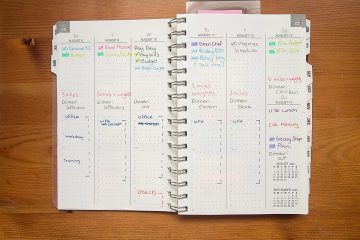
Today we are reviewing the Essential Daily Planner. This planner comes in three sizes, 5×8 ($15.95), 7×9 ($17.95), and 8.5×11 ($19.95). I am reviewing the 5×8 version. They all are cream paper with wire-o binding and come with a snap-in ruler with sticky notes.

Links are Amazon Associate links. I may earn a small commission if you purchase through my link.

I used the planner for three weeks and here are my thoughts. First, for me, the 5×8 is too small. Or my handwriting is too big. I made an attempt to write smaller and a few different ways to make a to-do list in the top section. I also moved items around to see how they would work in different spots. I think my week two and three worked much better than week one. 

I do like how simple and clean the layout is. There’s nothing to really distract you. The monthly overview is simple and has enough room to fit a few items. As with most planners, there is a notes sidebar on the month. There is no dashboard. It goes right into the weeks. The weekdays are split in two, the top half being a blank to-do section and the bottom is times from 7 am to 8 pm.

One thing I did not like is the time section. I thought I would but when I had things on the half hour, there wasn’t really a spot for it. The hour has a line and the half-hour gets dots. It was a struggle when I had something at 8 and 8:30. The 8:30 item got squeezed on the dots.

The other thing that really bothered me and would probably stop me from using this planner is each week has a mini month for the current month and next month. I don’t need both and it takes up precious space on the Saturday/Sunday column. I’d rather have the space for additional weekend space. I hate planners that don’t give room for weekends because that’s when I do ALL the things! I peeped the larger sizes and they have the mini calendars next to each other and a weird space below them. I don’t know why they wouldn’t put them on the bottom of the page and make Saturday/Sunday bigger?

Overall, it’s not a BAD planner. The 5×8 is a good size if you need to carry it with you. The best part is the simple layout and it’s not too distracting. Although I think the weird mini planners in the larger size would annoy me with that extra space below them. 

The limited space, especially in the 5×8, means you gotta make choices. What do you really NEED to do? This is helpful for someone like me who thinks they can do EVERYTHING and it all only takes 15 minutes! I’m never late but I have other difficulties with time. I think things won’t take as long as they do. 

It would also be good if you do time blocking. I used the time section to mark off my work hours but you could also do that with tasks. I do not do time blocking. I have tried in the past and I usually end up doing whatever I feel like for however long instead of following the blocks.

Each of us with ADHD is different. While this was not the planner for me, maybe it will be perfect for you! What are your thoughts on this planner? Do you think it would be a good one for you?

If you want the Essential Daily Planner, head over to my YouTube and watch my video on it because it will tell you how you can win it!

  • Previous
  • 1
  • …
  • 7
  • 8
  • 9
  • 10
  • 11
  • 12
  • 13
  • …
  • 48
  • Next
Jenna Volden is a paranormal horror author specializing in atmospheric ghost stories that blur the line between the supernatural and the psychological. Her work centers on mystery, reinvention, and unreliable narrators who may not be able to trust their own minds.

Jenna Volden

Author
Jenna Volden is a paranormal horror author specializing in atmospheric ghost stories that blur the line between the supernatural and the psychological. Her work centers on mystery, reinvention, and unreliable narrators who may not be able to trust their own minds.

  • January 9, 2025 by Jenna Embrace Bold in 2025: My Ambitious Goals for the Year
  • December 26, 2024 by Jenna How to Set Up Your New Planner for 2025
  • December 21, 2024 by Jenna Coming Soon!
  • December 9, 2024 by Jenna 2025 Planner Stack: Tools for Organizing My Messy Mind
  • December 2, 2024 by Jenna 2024 Planners in Review

Categories

Find Runs on Espresso

Visit Us On InstagramVisit Us On YoutubeVisit Us On FacebookVisit Us On TwitterVisit Us On Pinterest
Terms of Use
Privacy Policy

Copyright Runs on Espresso/J Volden Creative LLC 2023

© 2026 Runs on Espresso | Powered by Minimalist Blog WordPress Theme